
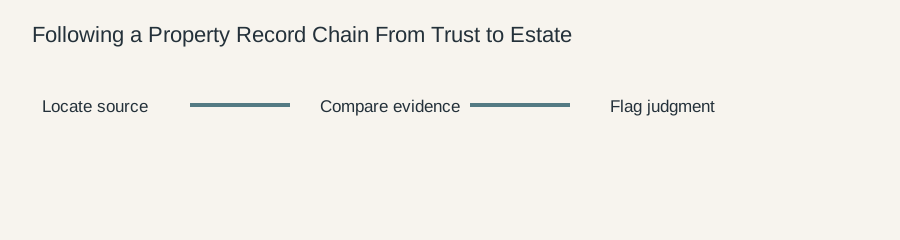
Property can move among an individual, a revocable trust, a successor trustee, and an estate file without the public records using the same language at every step. A deed may name the trust, a later affidavit may identify a successor trustee, and a probate petition may describe the same land as an estate asset. The research problem is to follow the documentary chain without assuming that a familiar family relationship proves a transfer, that a tax label proves title, or that a probate inventory resolves trust administration.
This article is a records workflow, not a determination of trust administration, title, tax, or fiduciary effect. The MDLandRec Search Aid Guide was checked as a locating reference; the responsible attorney and local custodian control the legal analysis.
Start with the proposition
Write a narrow question: “Which recorded instruments describe the parcel’s movement from the individual to the trust and later to a successor or estate?” Do not begin with “the trust owns the house.” Identify parcel, address, trust name, individual name, known trustee, instrument numbers, and the date of death. The proposition can then be tested against deeds, affidavits, trust references, probate filings, tax records, and current title.
Create a capacity table. One row may show the individual as grantor; another may show the individual as trustee; another may show a successor trustee or personal representative. Preserve the exact capacity wording and the source page. A name repeated across documents does not prove that the person acted in the same role each time.
Build the chain from recorded instruments
Retrieve the deed that first appears to place the property in the trust. Capture grantor, grantee, trust name, trustee language, legal description, recording date, instrument number, and referenced declaration or amendment. Then search forward for successor-trustee affidavits, trustee deeds, corrective instruments, death-related affidavits, and later conveyances.
Search backward too. The individual’s acquisition deed may reveal a different parcel description, a partial interest, an easement, or a reservation. A current tax account may combine land that was once separate. Compare legal descriptions rather than relying on the trust’s street address.
Worked example: trust deed and probate inventory
Suppose a 2012 deed conveys Lot 8, Block 2 to “Alex Rivera, Trustee of the Rivera Family Trust.” The 2024 probate inventory lists “the Oak Street residence” and a family email says the house was in the trust. A 2025 affidavit names a successor trustee, but the current tax roll still displays Alex Rivera individually.
The records support several observations: the deed displays trust capacity; the affidavit identifies a later trustee; the tax roll uses an individual label. They do not by themselves establish whether the trust was amended, revoked, funded correctly, or administered outside probate. Retrieve the referenced trust documents if authorized, compare the parcel description, and ask counsel whether the inventory row should be changed. Do not use the tax label to override the recorded deed, or the family email to prove the trust’s terms.
Change the deed so it names Alex individually, followed by a later instrument signed as trustee. That creates a different chain requiring review of the later conveyance and any authority it cites. Preserve both versions and ask whether the later instrument actually transferred the parcel or merely corrected a description.
Separate public title from trust terms
A recorded deed can show what was presented for recording. It may not reveal the complete trust agreement, amendments, powers, beneficiaries, or private accounting. A successor-trustee affidavit may identify capacity but not establish every fact about succession. A probate docket may show a petition or order without disclosing the complete trust administration.
Use source labels: recorded instrument, court filing, tax record, private trust document, family report, or locating lead. A private document should not be copied into public-facing content. A public record should not be treated as a complete substitute for the private instrument it references.
Dates and sequence
Label execution, acknowledgment, recording, death, trust amendment, successor appointment, probate filing, order, and retrieval dates separately. A deed recorded after death may have been signed earlier; an affidavit recorded after death may document an administrative event; a tax account may update later. The research chronology should report the sequence without deciding legal effect.
If an instrument refers to a trust created on a particular date, retrieve the referenced record if authorized and preserve the citation. Do not infer that the trust was effective, funded, or unchanged solely from the date in a deed.
Parcel and interest checks
Match the chain through legal description, plat, parcel number, prior deed, and current map. Note life estates, mineral reservations, easements, partial interests, condominium declarations, and entity ownership. A trust deed can cover less than the tax parcel. A later conveyance can exclude a strip or reserve rights. These details belong in separate evidence rows.
When descriptions conflict, state which document contains which description and what could resolve the conflict. Do not silently “correct” a legal description from a GIS map. If the source image is illegible, request a better copy or professional transcription.
Handoff and professional questions
The handoff should contain the chain table, instrument images, parcel crosswalk, capacity table, date chronology, trust references, probate links, tax labels, conflicts, and questions for counsel. Ask whether the property belongs in probate, trust administration, both records, or neither; whether a corrective or title filing is needed; and what source establishes the trustee’s authority.
When the chain contains a gap
If the expected trust deed is not found, do not substitute a tax label or family statement. Record the names, parcel, date window, recorder series, and variants searched. Search predecessor indexes and referenced plats. If the first apparent trust deed is found but the successor instrument is missing, label the chain incomplete and ask the custodian whether a separate affidavit series exists.
A gap can also occur because the property was never transferred to the trust. The probate inventory may then be relevant, but it still does not establish the complete ownership picture. Compare the individual acquisition deed, any attempted trust transfer, later deed, and current title. State whether the evidence supports a recorded transfer, an attempted transfer, a lead only, or no located instrument.
Keep private trust terms separate from public title records. If a document supplies beneficiary or amendment information, cite its controlled location and restrict the public summary to the fact necessary for the professional question. This protects privacy while keeping the evidence trail usable.
Before delivery, have a second reviewer reproduce the parcel crosswalk and identify the exact capacity language in the key instrument. If the reviewer cannot reproduce the match, revise the source citation or mark the chain unresolved. A concise unresolved result is stronger than a complete-looking chain built from assumptions.
Preserve the reviewer’s check with the source packet.
The source packet should also list the instrument numbers and recording office, because a later title search may expose a correction or a different parcel suffix. Keep the correction linked to the original rather than replacing the original path. This lets the professional decide whether the change affects the chain, the interest, or only a typographical field.
Private trust evidence and public title
The recorded deed and private trust instrument answer different questions. The deed may show capacity and legal description; the trust document may supply powers, amendments, and successor information. Keep private material in controlled provenance and cite only what the professional needs. If a probate inventory conflicts with the deed, report both observations and ask counsel which administration path applies.
Identify the break in the chain explicitly
When property moves from an individual to a trust and later appears in an estate file, list every instrument that connects the names, capacities, parcel description, and dates. A trust certificate may identify a trustee without proving the transfer of a particular parcel; a deed may identify the parcel without explaining why a later estate inventory includes it. In a worked file, the chain is complete through the recorded deed but breaks at a later assignment referenced only in correspondence. The correct handoff names that missing instrument and its custodian. It does not silently fill the gap with the inventory label.
Frequently asked questions
Does a trust name on a deed prove every trust term?
No. It shows the recorded language; the trust documents and professional review address the broader question.
Does a tax roll override a recorded trust deed?
No. It is a separate administrative record with its own purpose.
Should a trust property be removed from an estate workpaper?
Preserve the evidence and document the responsible professional’s disposition decision.
What makes the chain useful?
Exact instruments, capacities, legal descriptions, labeled dates, and visible gaps.